

by Design Concepts Global
Share
Every fit-out has two price tags. One is on the quote. The other shows up later, in energy bills, repaint jobs, broken fixtures, and the renovation you didn’t budget for. Traditional fit-outs hide that second price tag well. Sustainable fit-outs put more of it upfront. Which is why so many businesses pick the “cheaper” option and end up paying more.
Working with an experienced interior fit-out company in Dubai can help businesses compare upfront pricing with the full operational cost of the space.
This article compares sustainable vs traditional fit-out across initial cost, energy use, maintenance, durability, future renovation costs, and ROI, so you can see both price tags before you sign anything.
What Is the Difference Between a Sustainable and Traditional Fit-Out?
Traditional fit-out
A traditional fit-out is built around standard materials, conventional lighting, off-the-shelf MEP choices, and cost-led procurement. The priority is getting the space ready at the lowest upfront price, with little planning beyond move-in day. It’s not a bad approach; it’s just short-term by design.
Sustainable fit-out
A sustainable fit-out uses energy-efficient lighting, better insulation, low-VOC materials, durable finishes, and often recycled or locally sourced materials. It also tends to favor modular layouts, water-saving fixtures, and smarter HVAC and lighting controls.
The important distinction: sustainable doesn’t mean expensive luxury. It means choosing materials and systems that perform better over time, rather than ones that are simply cheaper to install.
The right approach to a commercial interior fit-out depends on the lease period, operating requirements, and long-term business goals
Why Sustainable Fit-Outs Cost More Upfront?
If you’ve ever compared two fit-out quotes side by side, you already know the sustainable one almost always comes in higher. That’s not padding; it’s reflecting real cost differences
- Better-quality materials that last longer
- Energy-efficient lighting and smart controls
- Smarter HVAC coordination instead of standard ducting
- Low-emission paints, flooring, and finishes
- Waste management planning during the build
- Documentation or certification costs, if you’re pursuing one
Fit-out costs are climbing globally regardless of the route you choose, so the smarter move is to judge a quote by value, not just the number. JLL’s 2026 guide puts the global average cost for a moderate corporate office fit-out at around $2,150 per sqm, with EMEA running higher at roughly $2,300 per sqm, a reminder that location and spec level move the number as much as sustainability does.
The mistake businesses make
They compare the upfront quote and stop there. Energy bills, repair costs, replacement cycles, and future modifications never enter the decision until they show up as expenses nobody planned for.
Why Energy Efficiency Improves Sustainable Fit-Out ROI?
This is where the math starts working in sustainability’s favor, and it’s the strongest financial argument for sustainable design.
Offices burn energy every single day through lighting, air conditioning, ventilation, office equipment, hot water, and the controls running all of it. A sustainable fit-out cuts that waste through LED lighting, occupancy sensors, daylight planning, proper zoning, efficient HVAC layouts, and smarter control systems. It’s a point competitor content leans on heavily, and for good reason; lighting, motion sensors, climate control, and natural light planning are consistently the biggest financial argument for going sustainable.
The savings won’t feel dramatic in month one. But stretch it across 3, 5, or 10 years, and lower utility bills become one of the clearest, most measurable parts of sustainable fit-out ROI.
Effective office interior design in Dubai can reduce energy demand through daylight planning, efficient lighting, flexible layouts, and properly coordinated HVAC zones.
How Traditional Fit-Outs Can Lead to Higher Maintenance Costs?
Cheap finishes don’t stay cheap; they just defer the cost to later. A traditional fit-out built on budget materials tends to need
- More frequent repainting
- Worn-out flooring sooner than expected
- Poor-quality joinery that needs constant repair
- Higher lighting replacement costs
- HVAC inefficiency from poor initial planning
A sustainable fit-out flips that pattern. Better materials and smarter systems mean less replacement frequency, less maintenance disruption, fewer material failures, and less utility wastage over time. USGBC data backs this up directly: LEED-certified buildings report almost 20% lower maintenance costs than typical commercial buildings, and green retrofits consistently bring operating costs down further.
How Durable Materials Lower the Real Cost of a Fit-Out?
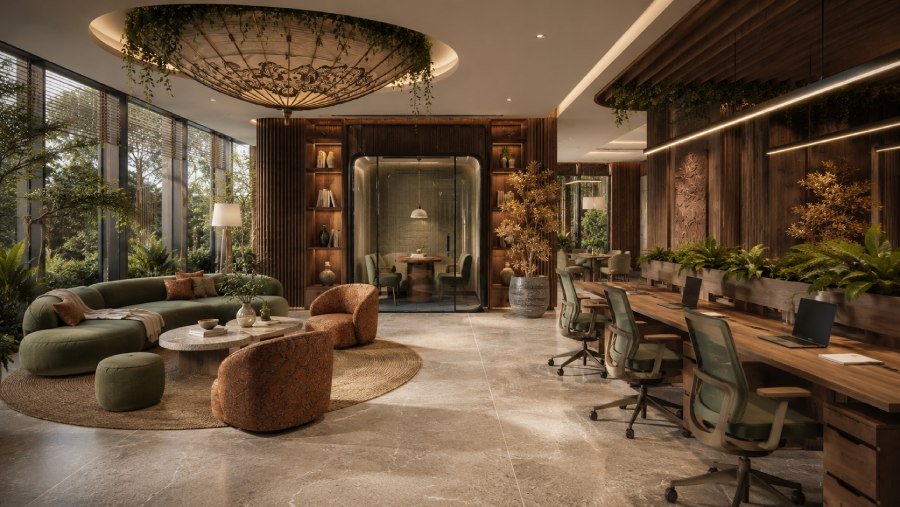
This is where sustainable design stops being an environmental talking point and becomes a straightforward business decision.
The durability difference shows up in practical, everyday choices
- Flooring that actually handles daily foot traffic instead of wearing thin within a year
- Modular partitions that can be reconfigured instead of demolished
- Quality joinery that doesn’t need early replacement
- Low-VOC paints and finishes that also support better indoor air quality
- Locally sourced materials that reduce transport delays and impact
The angle most people miss
A cheaper material that needs replacing in two years can end up costing more than a better material that lasts six to eight. The “cheap” option isn’t cheap; it’s just cheap once, repeatedly.
Effective office interior design in Dubai can reduce energy demand through daylight planning, efficient lighting, flexible layouts and properly coordinated HVAC zones.
How Future Renovation Costs Affect Fit-Out Value?
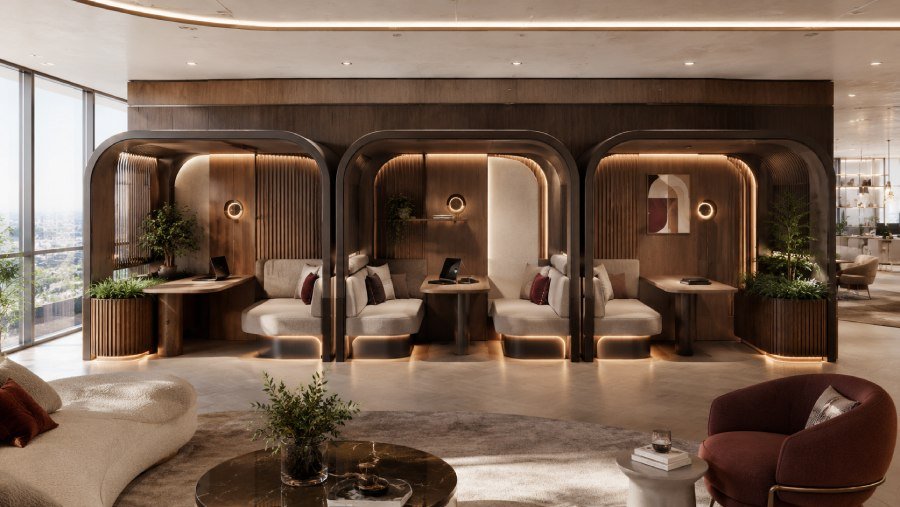
Offices don’t stay static. Teams grow, departments shuffle, hybrid working reshapes how space gets used, brands refresh their look, and leases end with reinstatement clauses that can get expensive fast. Most fit-out comparisons stop at year one and ignore all of this.
A sustainable fit-out is built to absorb that change instead of fighting it, through
- Modular walls that move instead of being demolished
- Reusable furniture that adapts to new layouts
- Flexible lighting layouts that don’t need rewiring
- Accessible MEP planning that simplifies future work
- Materials that can be reused or recycled rather than landfilled
Circular fit-out is a good real-world example of how far this can go. One London office project reported that 92% of its materials were reused on the next fit-out, cutting both waste and cost compared to a conventional approach. It’s a useful reminder that the conversation doesn’t have to be “new everything.” Often it’s “smart use of what’s already there.”
Businesses should plan a sustainable fit-out in Dubai from the design stage so material, MEP, energy and waste decisions are coordinated before construction begins.
How to Measure the Real ROI of a Sustainable Fit-Out?
Stop calculating ROI from the fit-out quote alone
The quote is one input, not the whole equation. The real formula looks more like this
Total Fit-Out Value = Initial Cost + Energy Cost + Maintenance Cost + Replacement Cost + Future Renovation Cost + Business Impact
A simple ROI checklist
Before signing off on either option, run through these questions
- How long will you actually use the space?
- What are your monthly energy bills likely to look like?
- Which materials will need replacing first, and how soon?
- Can partitions, furniture, or finishes be reused later?
- Will the space support employee comfort and productivity?
- Will the fit-out help with ESG targets, landlord requirements, or client perception?
WorldGBC’s own research backs this framing; green buildings save money not just through lower energy and water use, but through reduced long-term operation and maintenance costs as well.
Why Green Office Fit-Outs Can Be Worth the Higher Price?
Worth it when
- You plan to stay in the space for several years
- Energy bills are already a major operating cost
- Your team uses the office daily, not occasionally
- You want to avoid maintenance disruption
- You want a space that’s future-ready, not locked into one layout
- Your brand values sustainability and wants that reflected in the space
- ESG targets or landlord requirements are part of the equation
May not be worth it when
- You’re on a very short lease
- The fit-out is genuinely temporary
- Budget only stretches to basic compliance, nothing more
- The space will be demolished or fully reconfigured soon anyway
There’s no universal right answer here, only the right answer for your specific timeline and use case.
For a long-term office fit-out in Dubai, modular partitions, durable finishes and efficient building systems can deliver stronger whole-life value.
Sustainable vs Traditional Fit-Out: Side-by-Side Comparison
| Factor | Traditional Fit-Out | Sustainable Fit-Out |
|---|---|---|
| Initial cost | Usually lower | Usually higher |
| Energy use | Higher over time | Lower over time |
| Maintenance | Can increase with cheaper finishes | Often lower with durable choices |
| Durability | Depends on material quality | Usually planned for longer life |
| Renovation flexibility | May require more demolition | Can use modular/reusable elements |
| Long-term value | Lower if only cost-led | Stronger whole-life value |
| Best for | Short-term, basic spaces | Long-term, performance-led spaces |
Before choosing the lowest fit-out quote, look at the full life of the space, not just the number on day one. A sustainable fit-out may cost more upfront, but it tends to pay that back through energy savings, lower maintenance, durable materials, and fewer surprise renovation bills down the line.
If you’re planning a commercial interior, the smartest move isn’t picking the cheaper quote. It’s comparing both options through a whole-life cost lens, so you know exactly what you’re paying for, now and later.